
Blog > DEI in Real Estate: Why Equity, Inclusion, and Diversity Are a Professional Obligation : By Ken Alger, REALTOR®
DEI in Real Estate: Why Equity, Inclusion, and Diversity Are a Professional Obligation : By Ken Alger, REALTOR®
by
DEI in Real Estate: Why Equity, Inclusion, and Diversity Are a Professional Obligation
By Ken Alger, REALTOR®
Real estate is not a neutral profession.
Every showing we host, every offer we write, every neighborhood we frame as “a good fit”—or quietly steer away from—shapes who has access, who feels welcome, and who gets to participate in one of the most powerful wealth-building systems in our society.
Whether we acknowledge it or not, REALTORS® are community architects.
That role carries responsibility.
Diversity, Equity, and Inclusion (DEI) in real estate is not a political position, a marketing tactic, or a feel-good initiative. It is a professional obligation rooted in ethical practice, fair housing law, consumer protection, and long-term market health.
What DEI Actually Means in Day-to-Day Real Estate Practice
DEI becomes controversial when it stays abstract. In real estate, it is practical, operational, and measurable.
Diversity means competently serving people of different races, ethnicities, religions, abilities, ages, family structures, income levels, sexual orientations, gender identities, and cultural backgrounds—without assumptions shaping service.
Equity means understanding that not all clients enter the market with the same access to capital, credit history, generational wealth, or institutional knowledge—and adjusting guidance so opportunity is not quietly restricted.
Inclusion means creating a real estate experience where clients do not need to code-switch, self-edit, or wonder whether bias is influencing advice, availability, or enthusiasm.
This is not about altering outcomes artificially.
It is about removing invisible barriers that distort outcomes in the first place.

REALTORS® Are Community Builders—Not Passive Participants
Real estate professionals do more than facilitate transactions. We influence:
-
Where families put down roots
-
Which neighborhoods receive investment and advocacy
-
How schools, infrastructure, and local economies evolve
-
Whether generational wealth expands—or remains concentrated
When REALTORS® unconsciously gatekeep neighborhoods, rely on fear-based narratives, or allow personal comfort zones to shape recommendations, the consequences compound over time.
Steering does not need to be explicit to be harmful.
Silence, omission, and “soft discouragement” can be just as damaging.
If REALTORS® are not intentionally expanding access, we are often unintentionally restricting it.
Bias Is Not a Personal Flaw—It Is a Professional Risk
Every human carries bias. Pretending otherwise is the problem.
What separates ethical professionals from negligent ones is whether they acknowledge bias and actively work to manage it.
Unchecked bias increases exposure to:
-
Fair Housing complaints and enforcement actions
-
REALTOR® Code of Ethics violations
-
Reputation damage in an increasingly transparent, review-driven industry
-
Missed opportunities in diverse and growing buyer and seller markets
More importantly, bias produces poor advice. Poor advice leads to poor outcomes. Poor outcomes erode trust—not just in individual agents, but in the profession itself.
Competence in real estate today requires cultural literacy, not just contract knowledge.
What REALTORS® Should Be Doing—Practically and Professionally
DEI work is not about checking boxes. It is about skill development, self-awareness, and accountability.
1. Commit to Ongoing Self-Assessment
REALTORS® should routinely examine:
-
How personal background influences comfort levels
-
Which assumptions surface during client interactions
-
Whether “standard advice” is truly neutral—or inherited
This is not self-criticism. It is professional calibration.
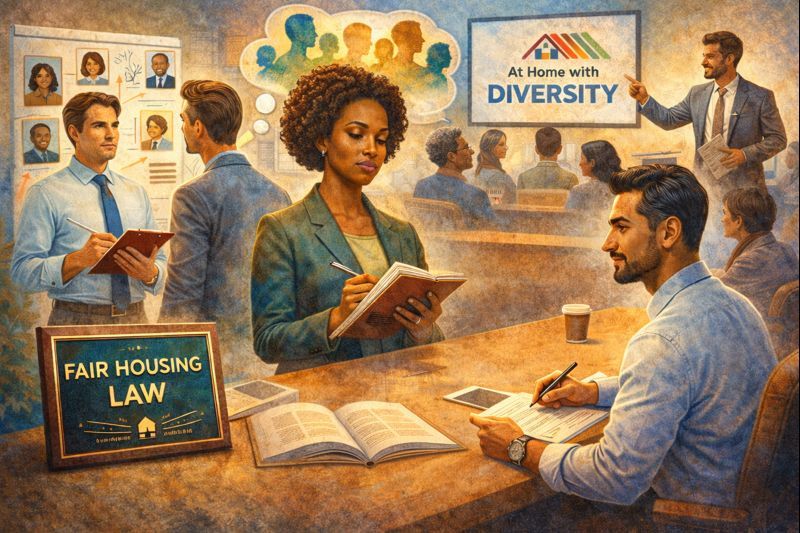
2. Invest in Continued Education—Especially Fair Housing–Focused Training
One of the most effective tools available to REALTORS® is the At Home With Diversity® (AHWD) certification.
AHWD is not surface-level training. It is designed to help real estate professionals:
-
Identify unconscious bias and cultural blind spots
-
Understand how historical housing practices still shape modern markets
-
Improve communication across cultures and lived experiences
-
Reduce legal risk related to fair housing violations
-
Serve diverse clients with competence and confidence
In short, it strengthens professionalism.
REALTORS® who pursue AHWD are not signaling ideology—they are demonstrating risk awareness, ethical commitment, and market fluency.
3. Get Involved Where Policy, Education, and Accountability Live
DEI does not advance in isolation. It advances through participation.
REALTORS® should actively engage with:
-
Fair Housing Committees
-
Diversity, Equity, and Inclusion Committees
-
Professional Standards and Ethics Initiatives
At the local, state, and national levels, including:
These committees are not symbolic. They shape education standards, ethical guidance, enforcement priorities, and industry direction.
If experienced REALTORS® opt out, leadership gaps get filled by indifference—or worse.
Inclusive Markets Are Stronger Markets
There is a persistent misconception that inclusion introduces instability. The data consistently disproves this.
Communities with broader access to homeownership experience:
-
Greater long-term stability
-
Stronger local economies
-
Higher rates of entrepreneurship
-
More resilient housing demand
Diversity fuels demand.
Equity stabilizes markets.
Inclusion builds trust.
DEI is not a social experiment—it is sound market stewardship.
The REALTOR® Code of Ethics Is Not Ambiguous
Fairness is not aspirational. It is enforceable.
DEI aligns directly with:
-
Article 10 of the REALTOR® Code of Ethics
-
Federal, state, and local fair housing laws
-
Core consumer-protection principles
This is not about personal belief systems.
It is about professional legitimacy.
REALTORS® are trusted precisely because they are expected to rise above personal bias in service of the public.
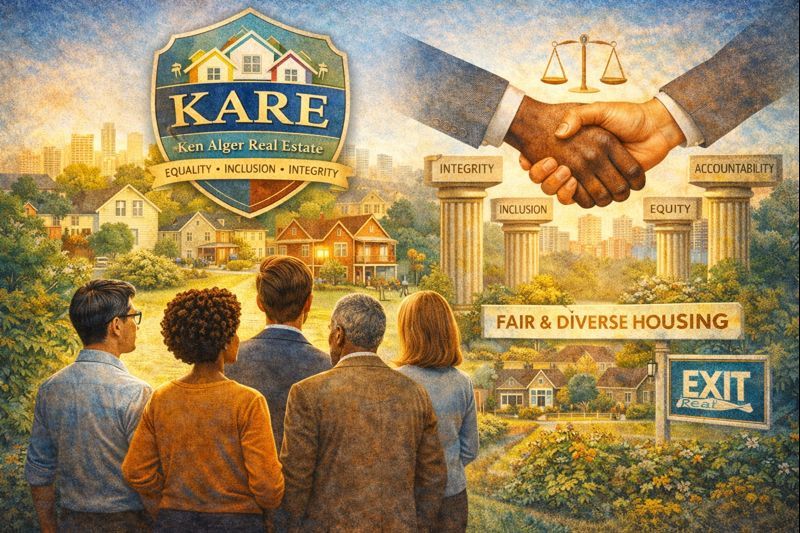
Where Ken Alger Real Estate (KARE) Stands
Ken Alger Real Estate, operating with EXIT Realty Springside, does not tolerate discrimination—subtle or overt.
We believe:
-
Equal access to housing opportunity is non-negotiable
-
Communities thrive when inclusion is intentional and informed
-
REALTORS® have a duty to lead with competence, integrity, and accountability
Promoting a fair and diverse market is not branding.
It is professional responsibility.
Leadership Is a Choice—So Is Inaction
The real estate industry is changing. Demographics are shifting. Consumers are more informed, more diverse, and more aware of their rights than ever before.
Agents who ignore DEI are not remaining neutral—they are choosing irrelevance.
Those who engage thoughtfully position themselves as trusted professionals in a market that increasingly values transparency, fairness, and ethical leadership.
The question is simple:
Will REALTORS® help build communities that reflect opportunity and growth—or allow bias and inertia to limit their potential?
If you are a real estate professional ready to elevate your practice—or a consumer seeking representation rooted in fairness, competence, and respect—I welcome the conversation.
Text KARE to 85377