

Blog > Homegrown by Systems I Didn’t Choose, Shaped by Lessons I Didn’t Ask For - A Personal Narrative About Growing Up Managed : By: Ken Alger, REALTOR®
Homegrown by Systems I Didn’t Choose, Shaped by Lessons I Didn’t Ask For - A Personal Narrative About Growing Up Managed : By: Ken Alger, REALTOR®
by
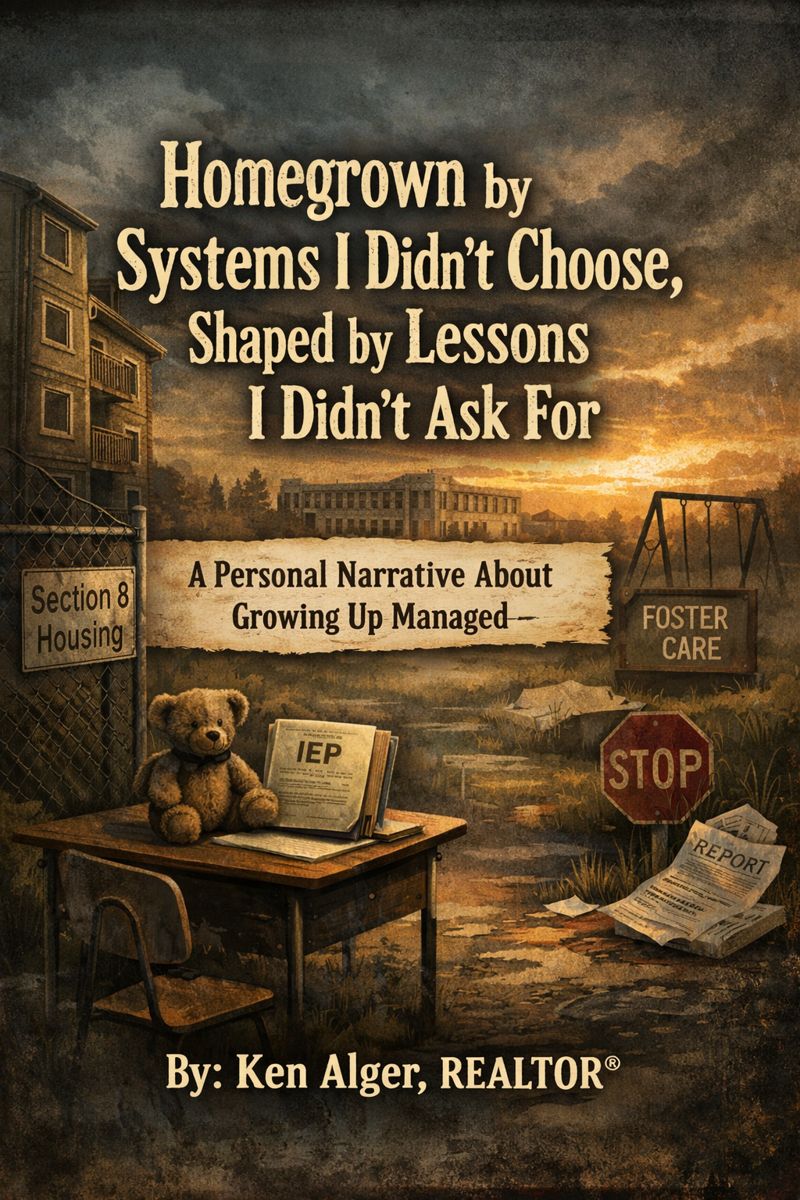
Homegrown by Systems I Didn’t Choose, Shaped by Lessons I Didn’t Ask For
A Personal Narrative About Growing Up Managed :
By: Ken Alger, REALTOR®
Before I Had Words for It
I grew up in Section 8 housing in northern Minnesota, and that fact alone explains more than most people expect it to. Not because poverty is an identity or a personality, but because it quietly establishes the baseline for what you believe life is supposed to look like. We were not a homeownership household. We were not an investing household. We were not a retirement-planning household. None of that existed in our conversations, because survival took up all the oxygen.
I learned the world through television, largely because television was predictable in a life where predictability was not guaranteed. It was always there, always on, always operating by rules that didn’t change depending on someone’s mood. My heroes were professional wrestlers, because they felt larger than life in a world that often felt constricting and volatile. They were exaggerated, theatrical, indestructible. When you’re small and powerless, that kind of symbolism sticks.
I was born in Hibbing, Minnesota, and raised mostly in Virginia, Minnesota. My parents divorced when I was three. I grew up with my single mother and my older sister. I’m not interested in turning this into an indictment or a courtroom transcript, but I won’t rewrite reality either. My mother was a chronic alcoholic, and anger in that house didn’t require a catalyst. As a kid, you don’t conceptualize that as abuse right away. You understand it as atmosphere. It becomes weather. You learn how to read it, how to brace for it, how to predict it before it hits.
I was also diagnosed with ADHD very early in childhood. My mother told me I was diagnosed at three years old. That diagnosis followed me everywhere, long before I had any framework to understand it myself. A hyperactive kid in a stable household is often framed as energetic, creative, or needing structure. A hyperactive kid in an unstable environment is treated as disruptive, defiant, or excessive. When you’re young enough, you don’t know whether you’re “difficult” or simply reacting to chaos. You just know that adults are always responding to you instead of listening to you.
Growing Up Managed Instead of Understood
There is a very specific childhood that comes from growing up inside systems. Not one system, but layers of them stacked together. Section 8 housing. School interventions. IEP meetings. Foster placements. Respite care. Mental health facilities. Rooms full of adults discussing you as if you’re not present, or worse, as if you’re a liability to be mitigated rather than a person to be understood.
By the time I was around twelve, foster and respite care were no longer occasional disruptions. They became part of the rhythm of my life. It started earlier, around nine or ten, and it continued until I was seventeen. My sister experienced it briefly, but for me it persisted. It’s difficult to explain to people who haven’t lived it, because foster care isn’t just a place you stay. It’s a message. It teaches you that your presence is conditional, that your stability is temporary, and that your comfort can be revoked without warning.
Living that way distorts your understanding of normal. When instability is constant, adaptation becomes second nature. You learn patterns quickly. You learn what behaviors provoke reactions and which ones buy you silence. You learn what keeps adults calm and what triggers escalation. You become observant in ways that other kids never have to be. Later in life, you realize that what you thought was “just how things work” was actually extreme, and other people didn’t have to become strategists just to get through an ordinary weekday.
School existed somewhere in the middle of all of this. I wasn’t popular. I was socially awkward for a long time, and I didn’t even recognize it as awkwardness at the time. I lacked guidance, emotional modeling, and consistency. I wasn’t taught how to regulate myself early, so I operated largely on impulse and reaction. School didn’t rescue me, but it did offer something valuable: a space where the rules at least pretended to be stable. Some teachers were good. Some weren’t. The larger truth is that support was limited, and most of what I learned about navigating authority came from necessity rather than mentorship.
When “Hard Childhood” Turns Into “Hard Teen Years”
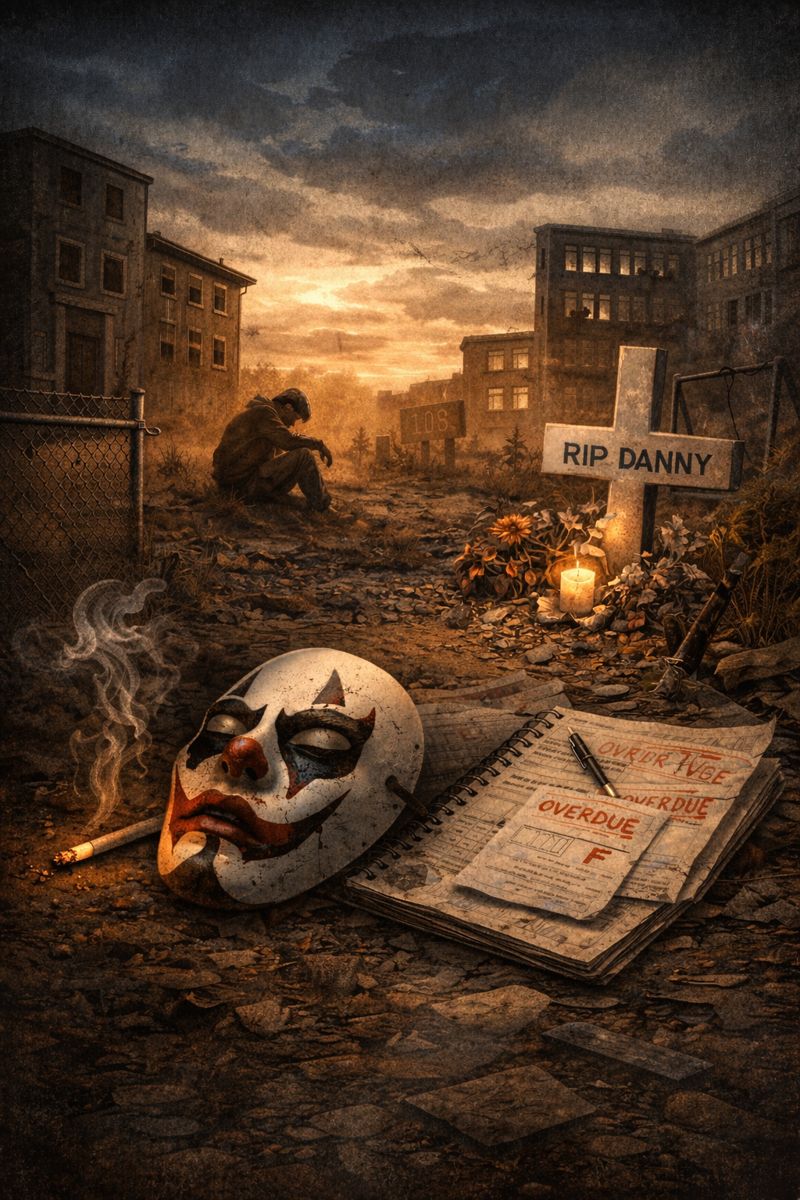
By seventh grade, I found a subculture that felt like belonging. I became a juggalo, and that mattered to me in a way people often dismiss. It wasn’t a trend or a phase. It was identity. I had discovered Insane Clown Posse earlier, but by that point I was fully immersed. It gave me language for alienation before I knew how to articulate it myself. It offered a sense of community when most of my life felt fragmented and imposed.
Academically, I didn’t take school seriously at first, especially homework. I was distracted, overwhelmed, and living in my head. I didn’t see a future that rewarded effort reliably, so deadlines didn’t feel meaningful. That wasn’t laziness. It was the predictable outcome of a kid whose nervous system was tuned for survival, not long-term planning. At one point I fell so far behind that passing required an absurd number of late assignments in a short period of time.
Mental health crises followed in my teenage years, and I’m not interested in dramatizing that period. I will say this: mental health facilities are not neutral environments for adolescents. Even when they are necessary, they teach lessons that linger. They show you how quickly autonomy can be removed. They show you what it feels like to be constantly observed. They teach you how absolute adult authority can become, even when it’s flawed. And they reduce entire lives to risk assessments.
During that time, one of my friends died by suicide. His name was Danny. I was young enough that the loss landed in a way I couldn’t process. At that age, death feels unreal until it doesn’t, and then it rearranges how you understand permanence. Over time, life moves forward, but that loss leaves a residue. It teaches you that people vanish abruptly, and that grief doesn’t ask permission before it embeds itself.
The Contract, the Spite, and the First Proof I Could Perform
After a particularly difficult stretch, I finished part of a school year away from my usual environment. When I was allowed back, it came with a behavior contract that included maintaining a certain grade average. What surprised me later was how quickly I shifted when expectations were explicit and consequences were tangible. I went from barely scraping by to making honor roll.
A lot of that motivation was fueled by spite. Spite gets a bad reputation, but when you’ve spent your life being underestimated, it can be an effective accelerant. That period taught me two things that stuck. First, I perform well when structure exists and expectations are clear. Second, I do not respond to humiliation or condescension. Shame might produce short-term compliance, but it also produces long-term resistance.
I wrestled Greco-Roman from childhood into early high school. I eventually quit, not because I couldn’t handle the sport, but because the team culture was something I wanted no part of. Later I tried basketball, but by then medication and life shifts had led to significant weight gain, and I didn’t fit. I still stayed involved as a manager, and a coach quietly covered for me when my home situation complicated things. That kind of quiet humanity sticks with you when you grow up without much of it.
When the System Says You Can’t Go Back
After intensive therapy as a teenager, professionals determined it would be harmful for me to return to my mother’s home. The problem was simple and unforgiving: if you can’t go back, and you don’t have a stable alternative, you become functionally homeless at exactly the age people expect you to “launch.” I entered a program for homeless youth, and by my senior year at eighteen, I was living on my own.
That kind of loneliness is specific. You can be surrounded by people and still have no one who understands your nights. You can appear functional while quietly unraveling. You can normalize scarcity so deeply that concern from others feels confusing rather than comforting. I had moments during that period that I won’t unpack here, but the throughline was clear: repeated instability erodes self-worth in ways that aren’t dramatic, just cumulative.
What matters most about that era isn’t a particular incident. It’s that I survived it. And I’m not unique for doing so. There are kids in Minnesota right now living variations of this reality. Foster placements. Shelters. Couch-hopping. Homes that look intact from the outside but feel hostile internally. When people talk about “the system,” they often mean policy. For the kids inside it, it’s daily life.
The Workforce Center and Learning How the World Actually Works
As a young adult, I didn’t have the informal training most people inherit. No family pipeline into employment. No coaching on resumes or interviews. I had survival skills, but survival doesn’t automatically translate into hireability unless someone explains the rules.
I went to the workforce center and enrolled in a program that taught interviewing, applications, resumes, and professional communication. I took it seriously. I applied what I learned. And the world responded differently. That was one of the first times I understood how much of “success” comes down to access to instruction rather than innate worth.
That realization changed how I saw myself. Not ego—competence. I learned that when expectations are clear and information is available, I can learn quickly and execute well. That pattern repeats throughout my life in logistics-heavy work, trades, caregiving, driving, and media. I’m not afraid of effort. I’m wary of systems that posture as supportive while quietly exploiting or controlling.
What These Systems Left Behind
Growing up inside Section 8 housing, foster care, IEPs, and institutions didn’t leave me with a single lesson. It left me with traits—some useful, some costly.
I learned vigilance. I read rooms quickly. Tone, posture, silence. Silence especially. I learned that official language can conceal reality, and that adults don’t always mean what they say. I learned that help can be conditional, and that stability often has an expiration date.
I learned guardedness. People sometimes interpret that as aloofness or privacy. It’s more practical than that. When your story becomes paperwork and gossip, you learn to protect it. Privacy becomes one of the few forms of control you can reliably maintain.
Most of all, I learned to trust consistent behavior over polished language. When you grow up unstable, you stop being impressed by performance. You watch patterns. Follow-through. Integrity under pressure. If words and actions don’t align, the words stop mattering.
Why I’m Writing This Now
I’m writing this because I’m tired of being reduced. Tired of being misread. Tired of having fragments of my life exist as rumors or assumptions. I’m also tired of foster kids being spoken about as a tragic category instead of whole humans capable of building stable, meaningful lives.
This isn’t about sympathy or resilience theater. It’s about finally having the language to describe what happened without translating it into something palatable or marketable. If someone feels seen reading this, that’s enough. If a kid still in the system stumbles across it and feels a flicker of possibility, that’s more than enough.
This story isn’t neat. It doesn’t wrap up cleanly. The systems I grew up in shaped me, but they didn’t finish me. I’m still here. I built a life anyway. And I’m still becoming who I am, on my own terms.
A Note to the Kid Still Inside It
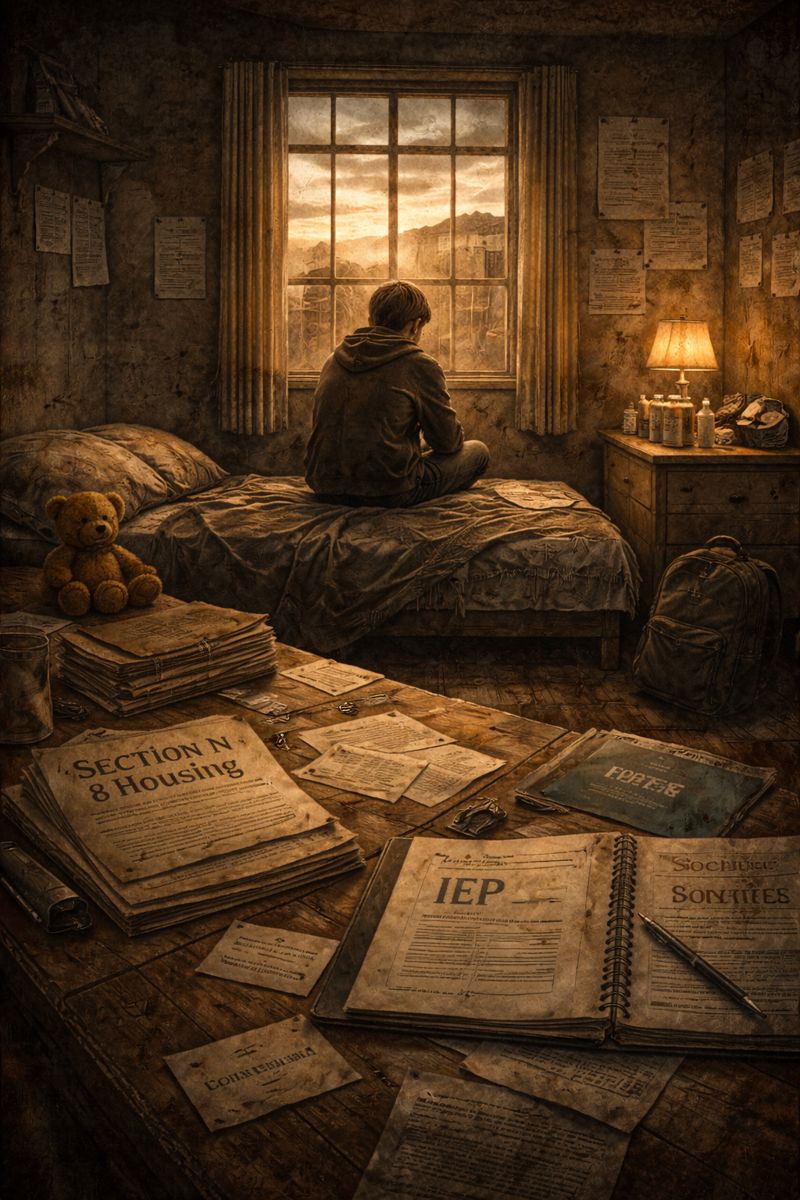
If you’re still in Section 8 housing, still in foster placements, still in respite care, still sitting through IEP meetings where adults talk like you’re a problem to manage, hear this.
Your current reality isn’t the full outline of your life. Labels aren’t destiny. Dismissal isn’t proof of limitation. You can come out of this with a working mind, an intact sense of self, and a future that doesn’t resemble your childhood.
It won’t be easy. Some of it will be lonely. But you aren’t broken for reacting to instability, and you aren’t weak for struggling. You deserve to be understood, not managed.