

Blog > Rebuilding Native Nations Through Real Estate: A Practical Strategy Rooted in Law, Land, and Long Memory : By Ken Alger, REALTOR®
Rebuilding Native Nations Through Real Estate: A Practical Strategy Rooted in Law, Land, and Long Memory : By Ken Alger, REALTOR®
by
Rebuilding Native Nations Through Real Estate: A Practical Strategy Rooted in Law, Land, and Long Memory
By Ken Alger, REALTOR®
This idea doesn’t come from theory.
It comes from paying attention to how land was actually lost—and how land can, quietly and lawfully, be brought back.
For generations, Native nations were dismantled through paperwork, property law, taxation, zoning, and administrative delay. Not just force. Not just violence. Systems.
So here’s the uncomfortable but empowering truth:
If land was taken through systems, it can be reclaimed through systems too.
Real estate is not a betrayal of sovereignty. It is one of the few remaining tools that still works inside the structure that exists today.
The Question We Rarely Ask Out Loud
Most conversations about Native land restoration stop at what was taken.
Very few ask how land actually moves now—legally, financially, and institutionally.
That gap matters.
Because nothing in United States law prevents Native people from:
-
Buying land
-
Holding title
-
Pooling capital
-
Transferring land to tribal entities
-
Moving land toward trust status over time
The barriers are real—but they are structural, not prohibitive.
And structural barriers can be navigated.
What the Law Actually Allows (And Always Has)
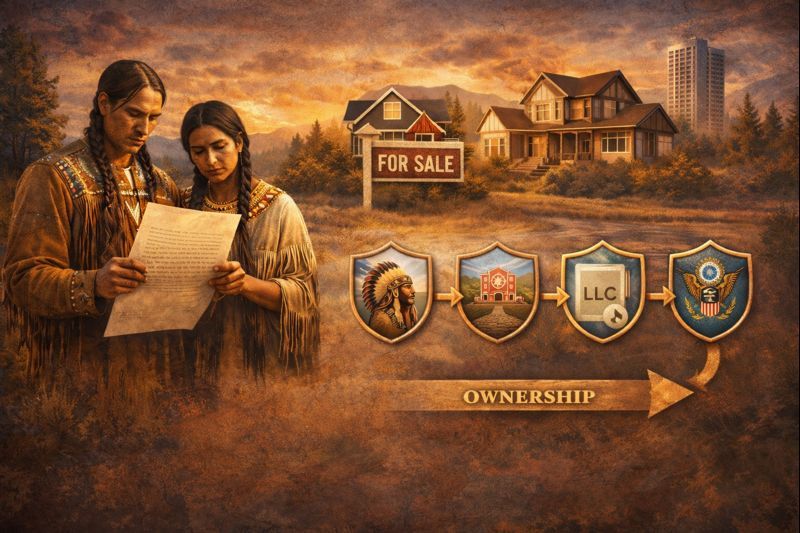
Native individuals can purchase fee-simple land like any other citizen. There is no carve-out, no exception, no restriction.
That land can later be:
-
Donated to a tribe
-
Sold to a tribal government or enterprise
-
Held by a tribal LLC or cooperative
-
Submitted into federal trust
This matters because it reframes land restoration as actionable, not aspirational.
You don’t start with sovereignty.
You start with ownership.
Understanding the Three Land Pathways
Not all land needs to move the same way. Different goals require different structures.
1. Fee Simple Ownership
Fast. Flexible. Fully legal.
Taxable and under state jurisdiction—but immediately usable.
This is often the best entry point for:
-
Housing
-
Agriculture
-
Small-scale economic development
-
Land banking near reservations
2. Tribal LLCs, Cooperatives, and Land Trusts
This is where scalability begins.
These structures allow:
-
Capital pooling
-
Shared governance
-
Reduced individual risk
-
Incremental land accumulation
They also face less political resistance than trust applications.
3. Federal Trust Land
This is where sovereignty becomes tangible.
Trust land:
-
Removes most state taxation
-
Limits state and county jurisdiction
-
Re-establishes Indian Country
The process exists under federal law—but it moves slowly, and not by accident.
The Real Bottleneck Isn’t Law—It’s Administration
The trust process runs through the Bureau of Indian Affairs, which is chronically understaffed and politically constrained.
States and counties often resist trust applications for one simple reason:
-
Trust land shrinks their tax base
So the delay isn’t legal confusion.
It’s institutional friction.
And friction doesn’t disappear by demanding harder—it disappears when pressure is applied from multiple directions.
Why Land Restoration Has to Be Multi-Front
This is where many efforts stall: trying to solve everything from one angle.
A durable strategy works on several fronts at once.
Capital Formation
-
Individual Native buyers
-
Family pooling
-
Tribal cooperatives
-
Native-led land trusts
Strategic Acquisition
-
Parcels adjacent to reservations
-
Land with utility access
-
Undervalued rural or transitional land
Institutional Presence
This part is rarely discussed, but it’s critical.
Native citizens working inside:
-
BIA land and trust offices
-
Tribal land departments
-
Appraisal, planning, and zoning
-
Real estate, title, and land-use law
You don’t dismantle bottlenecks from the outside alone.
You reduce them by being present on the inside.
Governance Transparency
Land strategies fail when communities don’t trust the process.
Clear rules, shared oversight, and distributed risk aren’t bureaucratic extras—they are survival tools.
Why Real Estate Isn’t “Selling Out”
This concern deserves respect.
But here’s the reality:
Land loss didn’t happen because Native nations lacked morality.
It happened because others mastered systems faster.
Using property law, financing, and land-use tools isn’t assimilation.
It’s fluency.
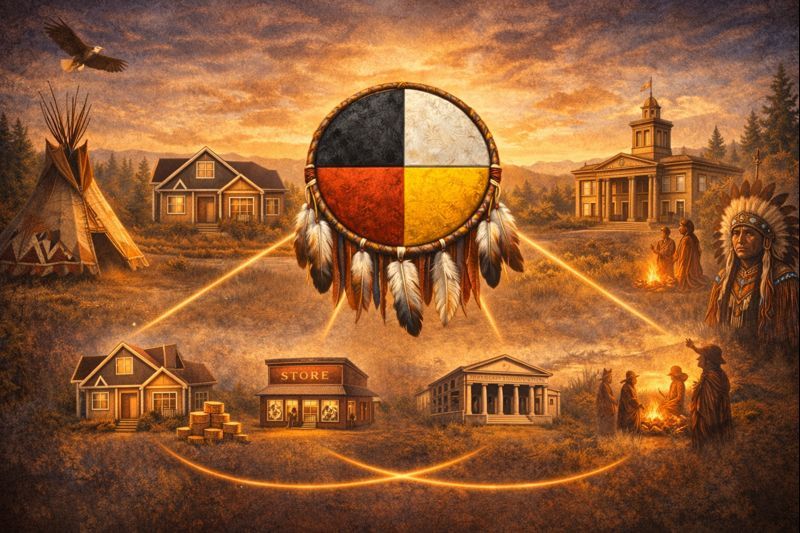
Land creates gravity:
-
Housing needs land
-
Commerce needs land
-
Governance needs land
-
Culture needs place
Without land, sovereignty becomes symbolic.
With land, sovereignty becomes operational.
This Is Not a Miracle Plan—and That’s the Point
No single parcel fixes history.
No strategy restores everything at once.
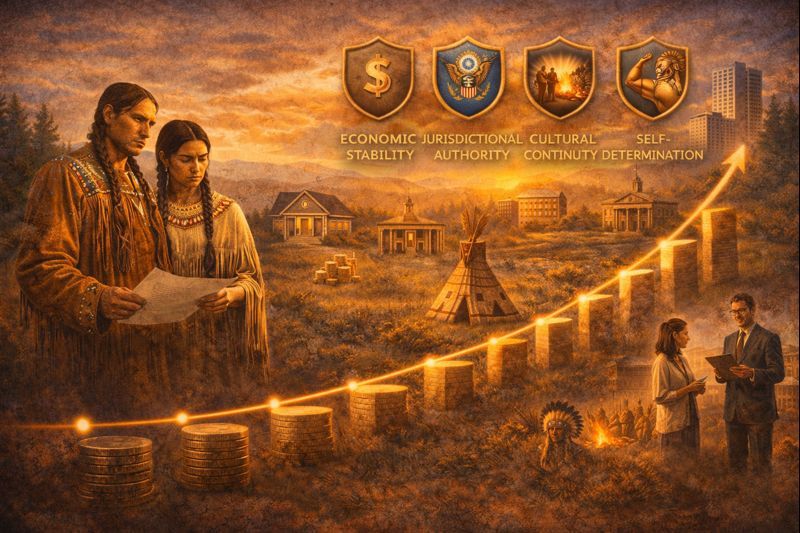
But land compounds.
One parcel becomes two.
Two become a corridor.
Corridors become communities.
Incremental land recovery strengthens:
-
Economic stability
-
Jurisdictional authority
-
Cultural continuity
-
Long-term self-determination
Progress doesn’t need to be total to be meaningful.
Why This Approach Is Effective
Because real estate is a language institutions already understand.
This framing:
-
Reaches policymakers, not just activists
-
Engages lenders, planners, and governments
-
Turns sovereignty into infrastructure
-
Makes restoration measurable and defensible
It doesn’t ask permission.
It operates within reality.
The Takeaway
Rebuilding Native nations through real estate is not hypothetical.
It is:
-
Lawful
-
Ethical
-
Already happening in pieces
-
Scalable if treated seriously
Land was taken through systems.
It can be reclaimed the same way—carefully, patiently, and on Native terms.
That isn’t compromise.
That’s strategy.