

Blog > Service Animals, Emotional Support Animals, and Therapy Animals in Housing By Ken Alger, REALTOR®
Service Animals, Emotional Support Animals, and Therapy Animals in Housing By Ken Alger, REALTOR®
by
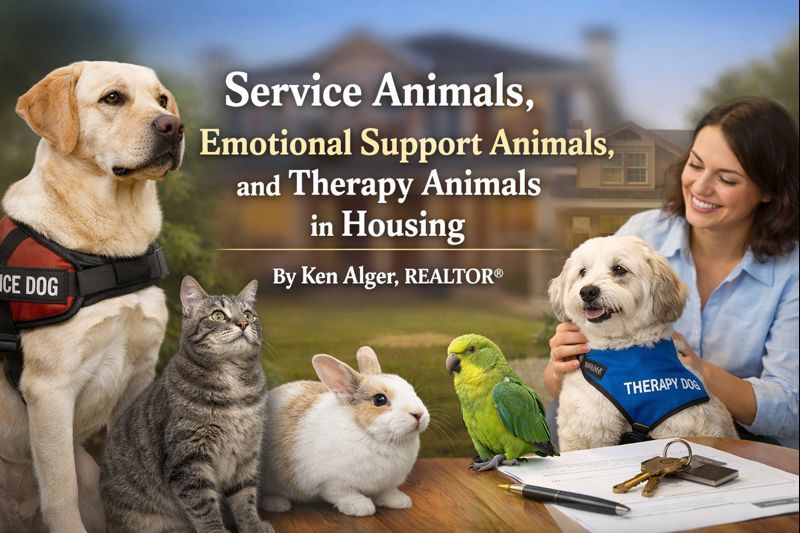
Service Animals, Emotional Support Animals, and Therapy Animals in Housing
By Ken Alger, REALTOR®
Disclaimer (read first):
This article is for educational purposes only. It is not legal advice, and I am not an attorney. Laws can change, interpretations vary, and individual facts matter. If you are facing a denial, enforcement action, eviction, or legal dispute, consult a qualified attorney or a fair housing agency. As a REALTOR®, my role is to educate and help people navigate housing—not to provide legal representation.
Why this topic causes so many housing conflicts?
Animals connected to disability needs are one of the most misunderstood issues in real estate and housing.
Tenants hear, “That’s illegal.”
Landlords hear, “We’ll get sued.”
HOAs rely on outdated rules.
Buyers worry about condo bans and insurance issues.
And in the middle of all of it?
A massive amount of misinformation—especially about breed bans, registries, documentation, and what housing providers are actually allowed to deny.
This article is designed to do one thing well:
Explain how the law actually works in housing, in the correct order, without myths, fear-based assumptions, or internet nonsense.

Step one: understand the legal framework BEFORE the animal
Almost every housing dispute involving service animals or ESAs turns on one concept:
Reasonable accommodation
A reasonable accommodation is a change to a rule, policy, practice, or service that is necessary to give a person with a disability an equal opportunity to use and enjoy their housing.
This comes from fair housing law—not pet policy.
That means:
-
“No pets” rules can be modified
-
Breed bans can be overridden
-
Weight and size limits can be waived
-
HOA animal prohibitions may not apply
When an animal is approved as an assistance animal, it is not legally treated as a pet.
This framework applies before arguments about breed, size, training, or insurance ever come into play.
Order matters: how this is supposed to work
The correct, legally sound order is:
-
The person requests a reasonable accommodation
-
The housing provider evaluates whether the request is reasonable
-
Documentation is requested only if the disability or need is not obvious
-
The accommodation is approved or denied based on specific facts, not assumptions
Many problems happen because people skip step one or housing providers jump straight to step four.
What housing providers CANNOT do (this is where most violations happen)
Breed bans cannot be used to deny assistance animals
This is not optional, and it is not a gray area.
Landlords, HOAs, cities, counties, and even state law cannot deny a service animal or emotional support animal solely because of its breed.
That includes:
-
“Aggressive breed” lists
-
Insurance-driven exclusions
-
Municipal breed bans
-
HOA governing documents
Breed alone is never a valid reason for denial once an animal is requested as a reasonable accommodation.
“Perceived danger” is not enough
Housing providers cannot deny an assistance animal because they believe the breed is dangerous or because they are afraid of liability.
The law requires individualized assessment.
That means:
-
The focus must be on this specific animal
-
There must be actual evidence, not fear or stereotype
-
The housing provider carries the burden of proof, not the tenant
To lawfully deny an animal as a “direct threat,” the provider must show:
-
The animal has engaged in dangerous behavior in the past, or
-
There is a specific, demonstrable risk that cannot be mitigated
Statements like:
-
“That breed is dangerous”
-
“Our insurance doesn’t like those dogs”
-
“We’ve had problems before”
are not legally sufficient on their own.
Now that the framework is clear, let’s define the animals
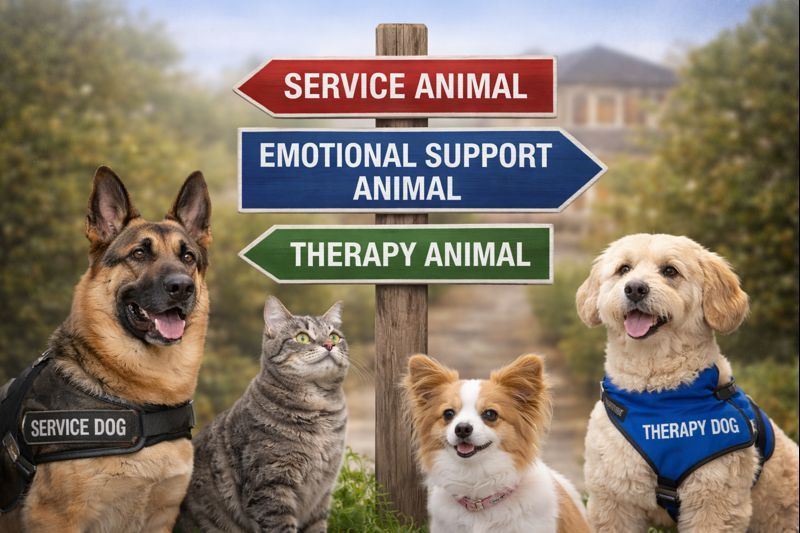
Understanding the categories matters—but only after understanding accommodation.
Service animals: what actually makes one legitimate
A service animal, under federal law, is:
-
A dog (and in limited cases, a miniature horse)
-
That is individually trained
-
To perform specific tasks directly related to a person’s disability
This is critical and often misunderstood:
Service animals can be professionally trained OR home-trained.
There is no requirement that a service animal:
-
Come from a school
-
Be trained by an organization
-
Be certified or registered
What matters is task-specific training, not who trained the animal.
Examples of valid service animal tasks:
-
Interrupting panic attacks or dissociation
-
Alerting to seizures or medical changes
-
Guiding or mobility assistance
-
Retrieving items
-
Grounding behaviors on command
What does not qualify is general comfort alone. Emotional benefit is real—but without task training, it falls under housing accommodation law, not ADA service-animal law.
Emotional support animals (ESAs): broader, but still structured
An emotional support animal provides therapeutic benefit that helps alleviate symptoms or effects of a disability.
Key points:
-
ESAs do not require task training
-
ESAs are not limited to dogs
-
ESAs do not have public-access rights
-
ESAs are protected in housing through reasonable accommodation
In housing, service animals and ESAs are often grouped together as assistance animals.
Almost any animal can be an ESA — with important caveats
This is another area full of misinformation.
There is no fixed list of animals that can or cannot be emotional support animals.
In principle, almost any species can qualify.
However, the accommodation must still be reasonable.
Common, legitimate limitations include:
An ESA generally cannot be:
-
Poisonous or venomous
-
Carrying infectious diseases that pose a health risk
-
Likely to cause infestations (fleas, mites, parasites)
-
Illegal to possess under state or local law
-
Impossible to safely house in the specific dwelling
So yes—dogs, cats, rabbits, birds, reptiles, and other animals may qualify.
But reasonableness depends on health, safety, legality, and context, not personal preference.
Therapy animals: important, but often misunderstood
Therapy animals are trained and certified through organizations to provide comfort to other people—in hospitals, schools, nursing homes, or disaster response.
Therapy animals:
-
Are not service animals under the ADA
-
Do not automatically create housing rights
However, a therapy animal may still qualify as an assistance animal in housing if there is a disability-related need and a reasonable accommodation is requested.

Documentation: what matters and what doesn’t
There is no national registry
There is no official national registry for service animals, ESAs, or therapy animals.
Websites selling:
-
“Federal registration”
-
“Official certificates”
-
“Service animal ID cards”
are not government agencies. Their documents do not create legal rights by themselves.
What documentation may be requested
If the disability or need is not obvious, housing providers may request reliable documentation that:
-
Confirms a disability exists, and
-
Explains the disability-related need for the animal
They generally cannot require:
-
Diagnosis details
-
Medical records
-
Proof of registration
-
Certification from a third-party website
Fees, deposits, and damage
Pet rent and pet deposits
Because assistance animals are not pets, housing providers generally cannot charge:
-
Pet rent
-
Pet deposits
-
Pet fees tied to animal status
Damage responsibility still applies
Residents remain responsible for actual damage caused by their animal.
Accommodation does not mean immunity.
Owner responsibilities (non-negotiable)
Rights come with responsibilities.
If you request an accommodation, you are expected to:
-
Keep the animal under control
-
Ensure the animal is housebroken
-
Follow licensing and vaccination laws
-
Prevent nuisance behavior
-
Address problems promptly
Failure to do so can justify removal of the animal—even if the accommodation was valid.
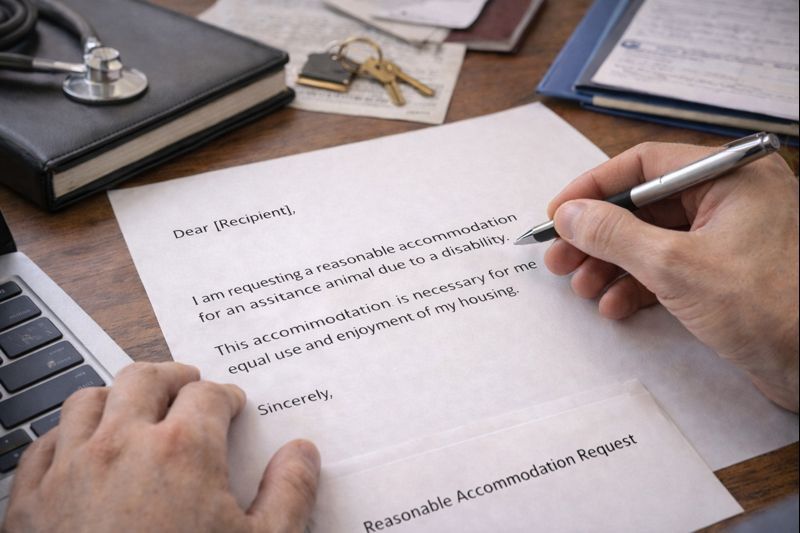
How to properly request a reasonable accommodation
A proper request is:
-
Written
-
Simple
-
Professional
You do not need legal language or emotional explanations.
A basic request might say:
“I am requesting a reasonable accommodation for an assistance animal due to a disability. This accommodation is necessary for me to have equal use and enjoyment of my housing.”
Documentation should be provided only if requested and only to the extent necessary.
Bottom line
-
Reasonable accommodation is the foundation
-
Breed bans and perceived danger are not valid reasons for denial
-
Service animals can be home-trained
-
Almost any animal can be an ESA, with health and safety limits
-
Rights exist—but responsibilities matter
Most housing conflicts around animals don’t come from bad actors.
They come from bad information.
If you’re renting, buying, selling, or navigating housing rules in Minnesota, especially in the Twin Cities metro, and want help understanding how assistance animals intersect with real estate decisions, I’m always happy to walk through it with you.
Ken Alger, REALTOR®
📞 612-434-2477
✉️ kenalgerrealestate@gmail.com
And when the situation moves beyond education into enforcement or legal risk, I’ll tell you plainly when it’s time to bring in a fair housing professional or attorney.