

Blog > The Modern Gospel of Wealth 2.0 : By Ken Alger, REALTOR®
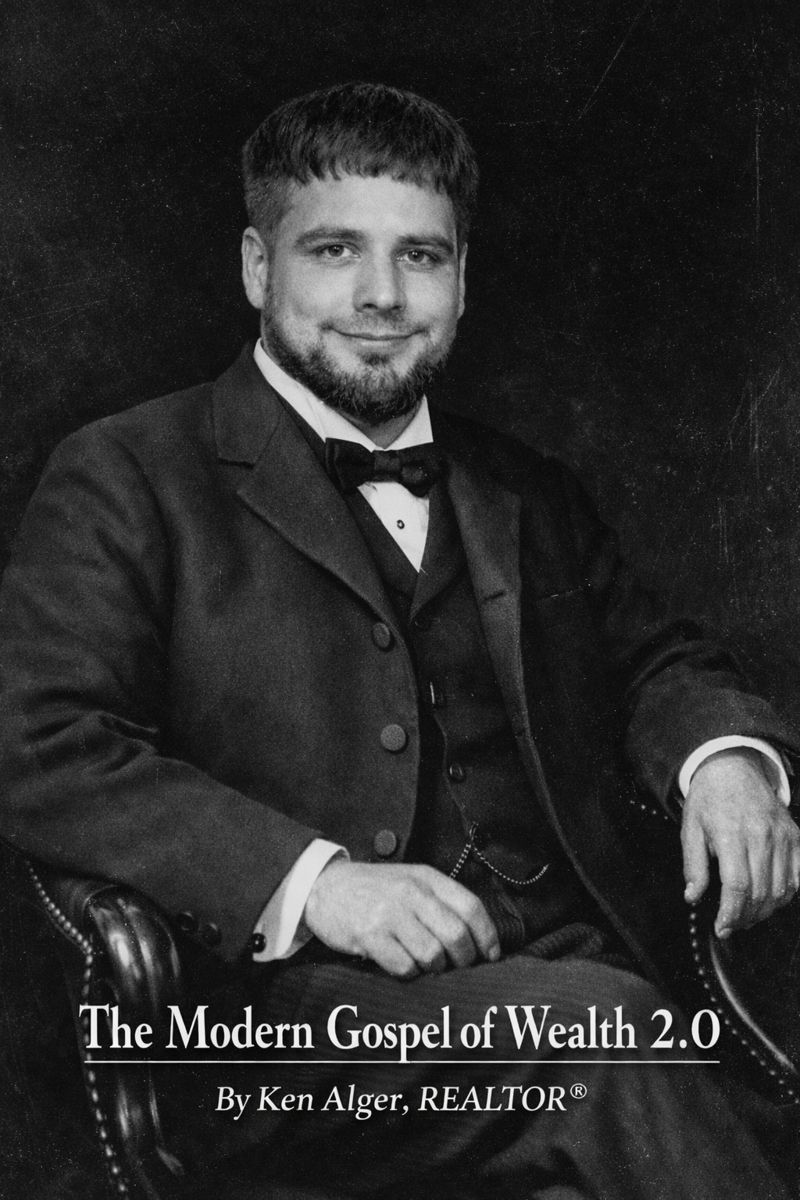
The Modern Gospel of Wealth 2.0
By Ken Alger, REALTOR®
There was a moment in American history when the wealthiest man alive looked directly at his peers and said, in plain terms:
If you die rich, you failed.
Not spiritually.
Not rhetorically.
Morally and socially.
That man was Andrew Carnegie—an immigrant who arrived poor, rose to dominate American industry, and became the richest individual in the world during the Gilded Age. Carnegie understood capitalism from the inside. He helped shape it. He profited from it. And precisely because of that, he recognized its most dangerous flaw:
Wealth, when detached from obligation, destroys the very society that allows it to exist.
In 1889, he wrote The Gospel of Wealth not as a confession, but as a directive. It was not addressed to the poor. It was addressed to the elite. And it was never meant to be comfortable.
Today, we like to quote Carnegie.
We do not like to obey him.
Carnegie’s Core Truth, Stripped of Romance
Let’s be honest about what Carnegie actually believed—because modern retellings sand the edges off his message.
Carnegie did not argue for equality of outcome.
He did not oppose capitalism.
He did not pretend wealth accumulation was gentle.
He argued something far more unsettling:
Inequality is tolerable only when it serves society.
He believed large fortunes were an inevitable byproduct of progress. But he also believed that once wealth exceeded reasonable personal use, it ceased to be private property and became a public trust.
Not metaphorically.
Not sentimentally.
Functionally.
The wealthy were not owners of surplus wealth. They were stewards of it.
That distinction is where the modern elite class went off the rails.
Stewardship Is Not Charity—and It Never Was
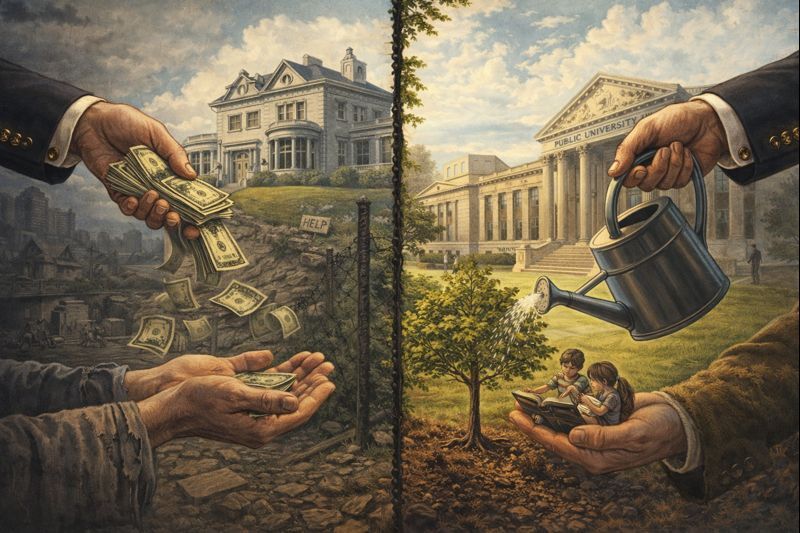
Carnegie rejected dependency, not humanity.
He understood something we now struggle to articulate: compassion without structure is corrosive, but structure without compassion is cruel. The answer was never neglect. The answer was intelligent responsibility.
He opposed:
-
Endless handouts that trapped people in survival mode
-
Charity that treated symptoms while preserving systems of extraction
He supported:
-
Education
-
Public institutions
-
Infrastructure
-
Opportunity that preserved dignity
There is nothing contradictory about helping someone once without creating dependence. A winter coat does not enslave someone. A meal does not destroy ambition. Emergency help is not moral failure.
What is moral failure is a system that extracts labor, inflates assets, consolidates land, and then lectures the public about personal responsibility while returning nothing of substance.
Carnegie knew the difference. We pretend it’s confusing.
The Modern Elite Didn’t Just Forget the Contract—They Abandoned It
The defining failure of today’s elite class is not greed. It is withdrawal.
They profit from:
-
Public infrastructure
-
Legal systems
-
Stable markets
-
Educated labor
Then they opt out of the consequences.
They leave:
-
Public schools for private academies
-
Public healthcare for concierge systems
-
Public transit for gated mobility
-
Public accountability for private influence
They extract value from society and then move above it.
Carnegie would not have admired this.
He would have recognized it as rot.
Inheritance and the Myth of Permanence
Carnegie feared inherited wealth more than taxation.
Why? Because inheritance breaks the feedback loop between effort and reward. It produces leaders who never had to build, never had to risk, and never had to answer for failure.
Generational wealth without obligation creates:
-
Detachment
-
Risk aversion
-
Moral amnesia
This isn’t an insult. It’s behavioral reality.
People raised inside insulation forget the systems that support them. Power becomes identity. Wealth becomes proof of worth rather than responsibility.
Carnegie insisted surplus wealth be distributed during life, not preserved indefinitely. Not because he hated families—but because he understood societies collapse when competence is replaced by entitlement.
A nation run by people who never had to earn their position eventually stops earning its future.
Philanthropy Was Never Meant to Be Safe
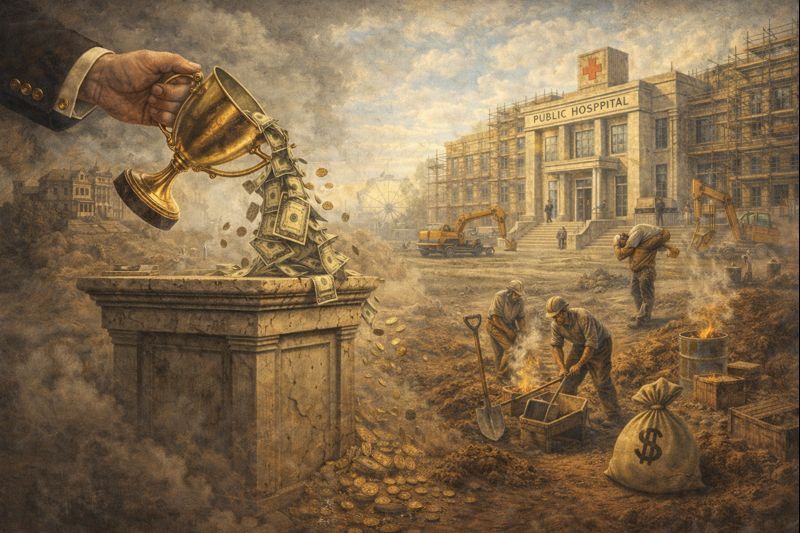
Carnegie gave away over 90 percent of his wealth.
Not through eternal foundations designed to preserve control.
Not through branding campaigns.
Not through performative generosity.
He believed wealth should move—now, not later—into public capacity.
Today, much of modern philanthropy is designed to:
-
Minimize tax exposure
-
Preserve influence
-
Avoid structural disruption
That isn’t generosity.
That’s risk management with good lighting.
And the public knows it.
The Modern Gospel of Wealth 2.0
If Carnegie were writing today—without Victorian restraint and without patience—his message would be blunt:
-
If you profit from society, you owe it reinforcement.
-
If your wealth does not strengthen public systems, it is unjustified.
-
If your success requires opting out of shared institutions, it is illegitimate.
-
If you die wealthy without redistributing surplus meaningfully, you failed your trust.
This is not radical ideology.
It is system maintenance.
Because when inequality loses its moral justification, history does not negotiate. It corrects.
Why This Matters—Especially Now
We are once again at a pressure point eerily similar to the Gilded Age:
-
Extreme concentration of wealth
-
Housing insecurity and land scarcity
-
Declining institutional trust
-
A widening gap between effort and access
As a REALTOR® working in Minnesota, I see this where it matters most: housing. Homeownership is not just shelter—it is stability, mobility, and generational opportunity. When capital hoards land, inflates assets, and disengages from responsibility, communities fracture first at the housing level.
Carnegie understood that societies tolerate inequality only when it proves useful to the many, not insulated for the few.
This Isn’t Just for the Wealthy
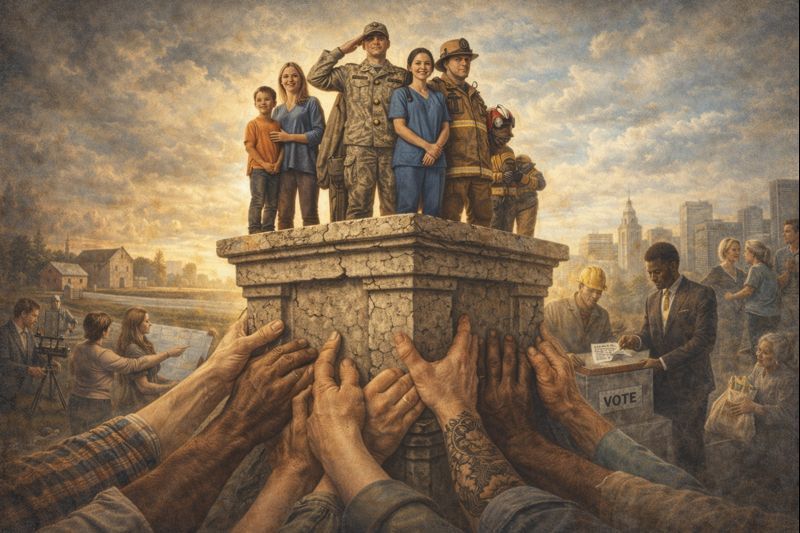
Not everyone has surplus capital.
Everyone has participation.
You can:
-
Demand accountability instead of excusing power
-
Build locally instead of disengaging
-
Help without humiliating
-
Contribute without waiting for permission
The Gospel of Wealth was never about guilt.
It was about obligation.
Carnegie fulfilled his—imperfectly, controversially, but deliberately.
The question now is whether modern society—and those who benefit most from it—are willing to honor the contract they inherited.
Because if they don’t, history will enforce it for them.
And it never does so politely.