

Blog > What Is Fair Housing? A Consumer Guide to Your Rights, Red Flags, and How to Take Action : By Ken Alger, REALTOR®
What Is Fair Housing? A Consumer Guide to Your Rights, Red Flags, and How to Take Action : By Ken Alger, REALTOR®
by
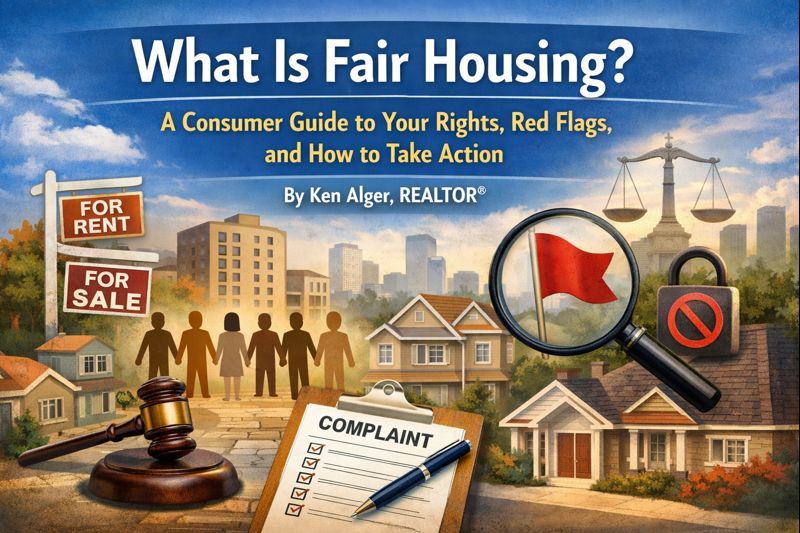
What Is Fair Housing?
A Consumer Guide to Your Rights, Red Flags, and How to Take Action
By Ken Alger, REALTOR®
Fair housing is the body of law that says you cannot be denied housing—or treated differently in a housing transaction—because of who you are.
That sounds straightforward. In practice, discrimination often shows up quietly: different rules, different urgency, different tone, different access, different excuses. This guide exists so consumers can recognize those patterns, understand why they matter, and know what to do when something doesn’t sit right.
What “fair housing” actually covers
Fair housing protections apply to nearly every stage of housing, including:
-
Renting (applications, screening, deposits, lease terms, renewals, repairs)
-
Buying (showings, access to listings, negotiations, offer handling)
-
Lending and financing (approval, denial, rates, fees, servicing)
-
Advertising and marketing
-
Homeowners associations, condos, and cooperatives
-
Reasonable accommodations and modifications for disabilities
At the federal level, the Fair Housing Act prohibits discrimination based on race, color, national origin, religion, sex, familial status (having children), and disability.
Minnesota law expands these protections further, adding additional protected classes beyond the federal baseline.
Why fair housing matters—even if you “got approved anyway”
Many people assume fair housing only applies when someone is outright denied. That’s incorrect.
Discrimination can still occur when:
-
You are delayed while others are fast-tracked
-
You are discouraged from certain neighborhoods
-
You are quoted worse terms, higher deposits, or stricter rules
-
You are subtly steered away from options without being told “no”
Fair housing exists because unequal treatment produces unequal outcomes, even when access appears technically available.
It also protects more than individuals—it protects communities, market integrity, and long-term stability.
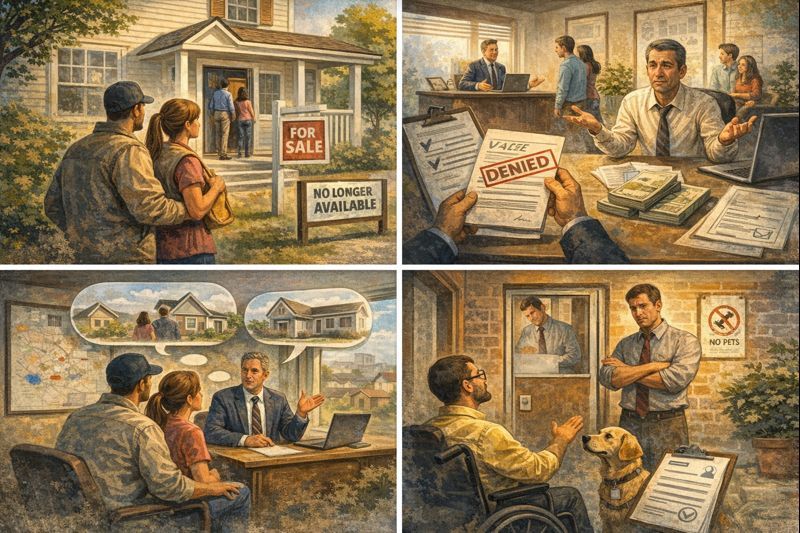
Common fair housing red flags consumers often miss
Unequal access
-
You struggle to schedule showings others receive quickly
-
A property is suddenly “no longer available” right after you inquire—repeatedly
-
You are told to “look elsewhere” without a neutral, objective reason
Unequal rules or costs
-
You’re asked for extra documentation others aren’t
-
You’re quoted higher deposits, fees, or stricter terms
-
Policies are described vaguely and seem to shift depending on who asks
Coded or indirect language
-
“Not a good fit”
-
“We’re looking for a certain type of tenant”
-
“Mostly adults here”
-
“The neighbors might not be comfortable”
-
“You’d probably feel more at home in another area”
Disability-related issues
-
Refusal to consider reasonable accommodations
-
Unnecessary delays or added hurdles
-
Resistance to assistance animals despite documentation
If something feels inconsistent, your instinct is worth paying attention to. Discrimination is often identified through patterns, not single dramatic statements.
Why your REALTOR®’s online behavior matters, too
Fair housing obligations do not stop at listings, contracts, or closings.
They extend to how real estate professionals conduct themselves publicly—including social media posts, comments, memes, and “personal opinions” shared online.
Under the Code of Ethics of the National Association of REALTORS, REALTORS® are prohibited from discrimination and from conduct that signals bias or exclusion—even outside a specific transaction.
From a consumer perspective, this matters because public behavior can:
-
Signal who will be welcomed or discouraged
-
Shape whether clients feel safe reaching out
-
Reflect attitudes that influence decision-making, consciously or not
Content framed as “just politics,” “just a joke,” or “just my personal page” can still raise legitimate fair housing concerns if it:
-
Dehumanizes or targets protected groups
-
Encourages exclusion or fear
-
Suggests certain people do not belong in a community
You are entitled to professional neutrality and equal treatment—not only at the closing table, but from the moment you decide who to contact.
If a REALTOR®’s public conduct gives you pause, that is relevant information—not overreaction.
What to do if you suspect discrimination
If something feels wrong, act methodically—not emotionally.
-
Document immediately
-
Date, time, and names
-
What was said or done
-
What you requested and how it was handled
-
-
Save all communications
-
Emails, texts, messages, voicemails
-
Screenshots of listings or ads
-
Written policies or criteria
-
-
Note inconsistencies
If you learn others received different treatment under similar circumstances, write it down. Investigators look for comparison patterns. -
Avoid oversharing
You are not required to explain personal details to justify equal treatment.

How to file a fair housing complaint
You can report discrimination through government agencies designed to investigate these issues.
-
Federal: File a complaint with the U.S. Department of Housing and Urban Development (HUD)
-
State (Minnesota): File with the Minnesota Department of Human Rights
There are time limits, generally one year from the last discriminatory act, so waiting for absolute certainty can work against you.
Filing a complaint does not automatically mean court. Many cases involve investigation, documentation review, and resolution efforts before any legal escalation.
Retaliation for filing or participating in a fair housing complaint is itself prohibited.
Frequently asked questions
Is it discrimination if someone is just rude?
Rudeness alone is not illegal. Discrimination involves unequal treatment tied to a protected characteristic or applied inconsistently.
What if they say it’s about credit or income?
Neutral standards are allowed. Selective, shifting, or exaggerated standards are not.
Can landlords say “no kids”?
Generally no. Familial status is federally protected, with limited exceptions for specific senior housing.
Does fair housing apply to mortgages?
Yes. Lending practices are covered.
What if I’m not completely sure?
You don’t need certainty to document or ask questions. Agencies exist to evaluate whether conduct meets legal thresholds.

The consumer takeaway
Fair housing does not enforce itself.
It works when consumers:
-
Notice patterns
-
Document facts
-
Speak up
-
Use the systems designed to protect access and equity
You are not asking for special treatment. You are insisting on equal treatment—and that distinction matters.
If you want a second set of eyes before you act
If something felt off in a showing, rental application, listing description, loan conversation, HOA rule, or even a REALTOR®’s public online conduct—and you want a calm, professional perspective before deciding next steps, reach out.
Email: kenalgerrealestate@gmail.com
Text: KARE to 85377
I can help you think through whether something raises fair housing concerns and point you to the appropriate resources if needed.