
Blog > What Really Happens When You Click “Schedule a Tour” : By Ken Alger, REALTOR®
What Really Happens When You Click “Schedule a Tour” : By Ken Alger, REALTOR®
by
What Really Happens When You Click “Schedule a Tour”
By Ken Alger, REALTOR®
If you’ve ever searched for homes online, you’ve almost certainly clicked “Schedule a tour,” “Request info,” or “Contact agent.” Most consumers assume that action connects them directly to the agent who listed the home.
That assumption is usually wrong.
This article explains—plainly and without fluff—how the real estate lead-generation marketplace actually works, what you are opting into when you click those buttons, and why the system is structured the way it is.
The basic reality most consumers are never told
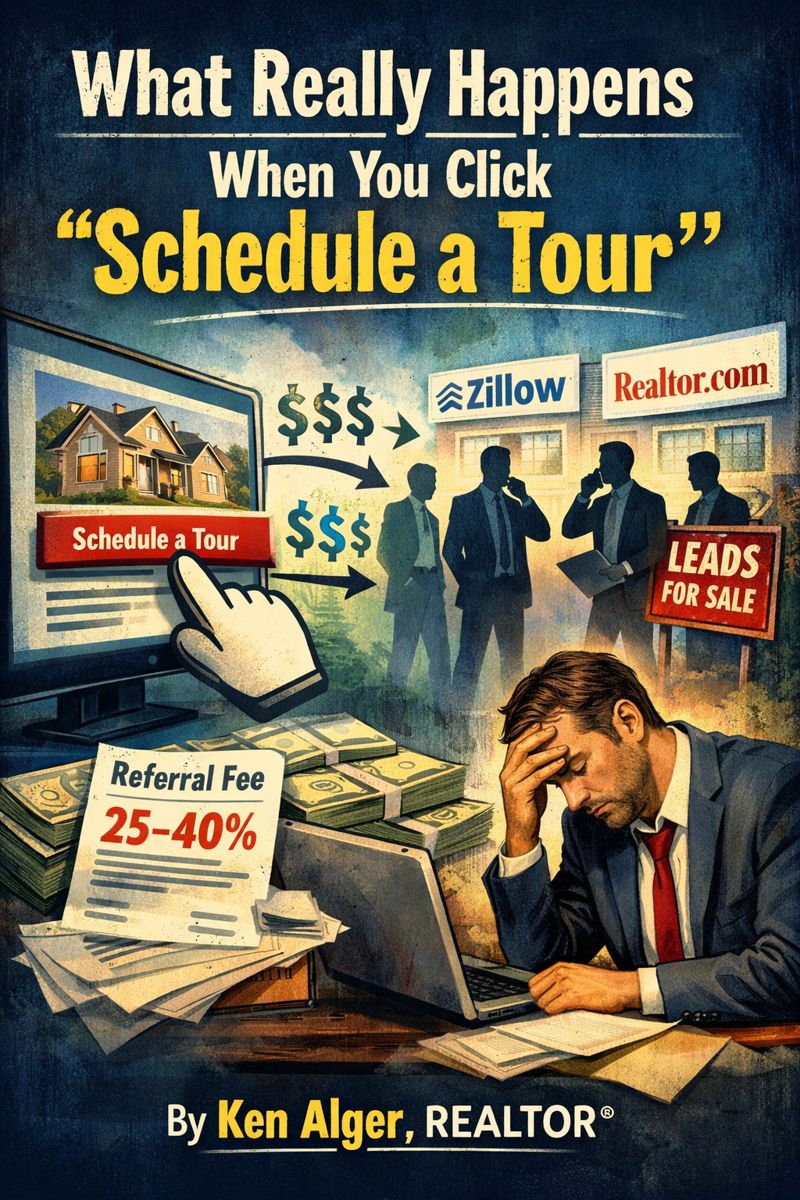
When you submit your information on sites like Zillow or Realtor.com, you are often not contacting the listing agent.
You are entering a paid lead-distribution system.
Your contact information is captured, routed, and sold to agents who pay significant money simply for the opportunity to speak with you.
How the system actually works (step by step)
1. Your information is captured
Your name, phone number, email address, and search behavior are collected the moment you submit a form.
2. Your inquiry is routed to a paying agent
That inquiry is sent to:
-
an agent who purchased placement in that ZIP code or price range,
-
a team that pays for lead volume, or
-
an inside sales system designed to contact you immediately.
The routing is based on who paid, not who listed the property.
3. The agent pays—regardless of outcome
Agents are charged whether:
-
you respond or not,
-
you are qualified or not,
-
you already have an agent,
-
or you never buy or sell anything.
Most portal leads never convert.
What this costs REALTORS® (in real terms)
Here’s the part consumers almost never see.
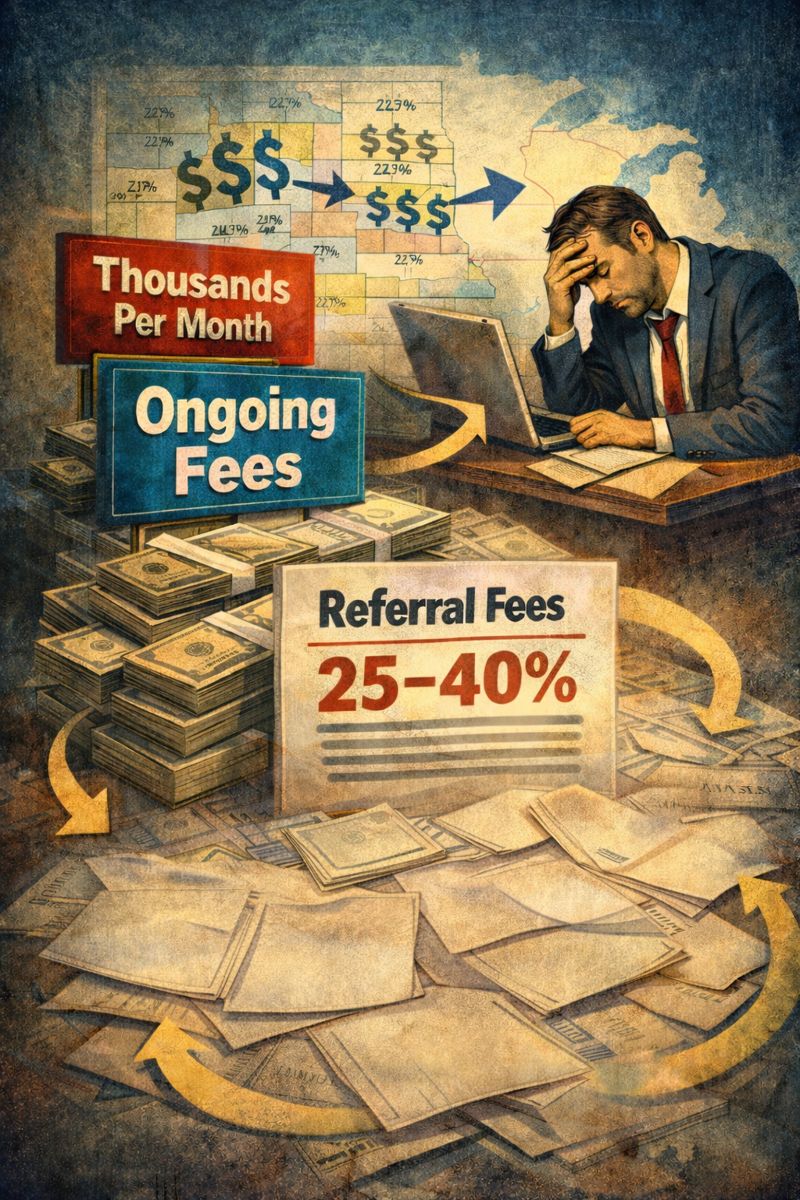
Agents routinely pay:
-
thousands of dollars per month for visibility in specific areas,
-
ongoing fees for lead access,
-
and often referral fees (commonly 25–40%) if a transaction closes—on top of everything already paid.
That’s before brokerage splits, taxes, insurance, MLS dues, licensing, and compliance costs.
In other words:
-
the agent pays to receive your information,
-
pays again to stay in the system,
-
and then gives up a large share of their income if the deal closes.
Realtor.com, NAR, and why this matters
Realtor.com is operated by Move, Inc., a subsidiary of News Corp.
Move licenses the REALTOR® trademark and the Realtor.com® domain through an agreement with the National Association of Realtors.
That licensing relationship allows the use of the REALTOR® name and branding. It does not change the fact that Realtor.com operates a paid lead-distribution business model similar to other major portals.
The branding may suggest neutrality or direct connection. The economics tell a different story.
Why this model distorts incentives
This system creates predictable consequences:
-
Agents are pressured to chase volume instead of fit
-
Response speed becomes more important than expertise
-
Consumers receive multiple calls for a single inquiry
-
High-quality local agents are priced out of certain markets
The platforms assume no transaction risk, no fiduciary duty, and no accountability for outcomes—while extracting value from both sides of the transaction.
The myth of “free” home search
These sites feel free because no invoice is sent to you.
But you still pay—just indirectly.
You pay with:
-
your personal information,
-
your time,
-
and your attention being sold into a competitive funnel you did not design.
That’s why a simple tour request can result in aggressive follow-ups from agents who may know little about the specific home you asked about.
Why agents get blamed for poor conversion
When leads don’t convert, the narrative is usually:
“The agent didn’t follow up well.”
Sometimes that’s true.
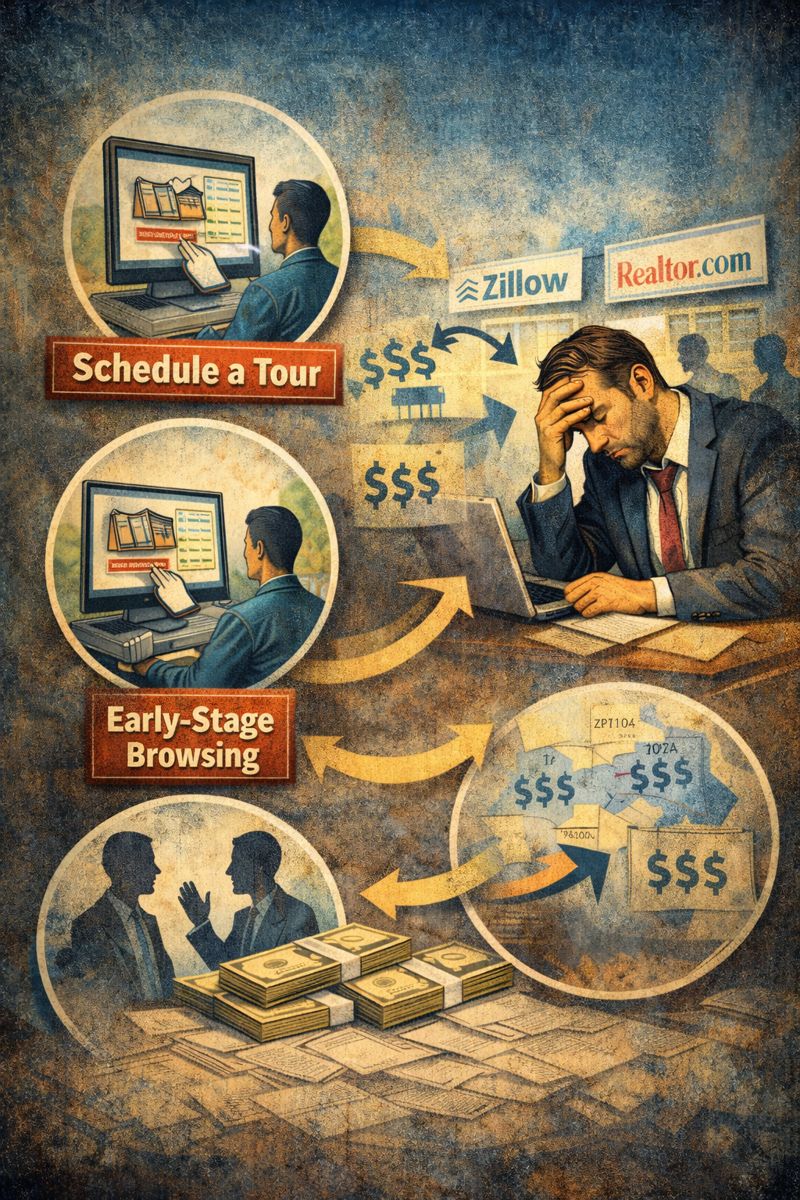
But it ignores:
-
accidental clicks,
-
early-stage browsing,
-
consumers already represented,
-
and routing decisions driven by payment rather than relevance.
That is not a performance issue.
That is a product design choice.
What consumers should do instead
If you want clarity and control:
-
Use portals for research, not representation
They are effective search tools—not fiduciaries. -
Choose a REALTOR® directly
A real relationship should not begin with a bidding system. -
Ask direct questions immediately
-
Are you the listing agent?
-
If not, how did you receive my information?
-
Is there a referral fee involved?
-
Straight answers matter.
Bottom line
When you click “Schedule a Tour,” you are often not contacting the listing agent.
You are entering a paid marketplace where your inquiry can be sold—sometimes more than once.
If you want fewer intermediaries, clearer incentives, and actual representation, start with a direct conversation—not a form.
If you’re buying or selling in Minnesota and want transparency from the beginning, email kenalgerrealestate@gmail.com or text KARE to 85377.