Blog > Where Are the Native REALTORS®? A Direct Look at Representation, Barriers, and Real Pathways by Ken Alger, REALTOR®
Where Are the Native REALTORS®? A Direct Look at Representation, Barriers, and Real Pathways by Ken Alger, REALTOR®
by
Where Are the Native REALTORS®? A Direct Look at Representation, Barriers, and Real Pathways
by Ken Alger, REALTOR®
In my three and a half years practicing real estate, one thing has stood out quietly but persistently: I rarely encounter REALTORS® who identify as Native American.
When I looked into available demographic data, what surfaced was stark. At the association level, Native American representation can register around 0.1%—a figure so small it risks being statistically invisible. Even at the national level, National Association of REALTORS® (NAR) member profiles typically show American Indian / Alaska Native representation at about ~1% of REALTORS®—still the lowest of any reported group and likely affected by under-reporting and rounding conventions .
Whether the true number is closer to 0.1% or 1%, the conclusion does not change: Native Americans are profoundly underrepresented in residential real estate.
That matters—because Native people absolutely participate in the housing market, particularly off-reservation. Jobs change. Families grow. People relocate. Homes are bought and sold. When the profession facilitating those transactions lacks meaningful Native representation, something is structurally off.
This is not about optics. It is about access and outcomes.
Homeownership remains one of the most significant tools for building and transferring wealth in the United States. National data shows American Indian and Alaska Native homeownership rates lag behind the national average, with substantial variation by state and region .
At the same time, peer-reviewed and fair-housing research has documented housing discrimination affecting Native Americans, including studies that specifically examined metropolitan housing markets in states such as Minnesota .
Representation alone does not solve these issues—but lack of representation compounds them. Real estate is a relationship-driven business. Trust, advocacy, cultural fluency, and institutional knowledge all influence outcomes.
Why Native representation in real estate is uniquely complicated
This gap does not exist because Native communities are “disinterested” or “unqualified.” There are structural, legal, and historical reasons the pathway is narrower.
1. Reservation land does not operate under standard real estate rules
Much reservation land is held in trust or restricted fee status. Trust land generally cannot be sold, mortgaged, or transferred without federal approval, and transactions follow processes that differ sharply from the fee-simple system taught in standard licensing education .
If your community’s land system does not align with MLS-driven residential brokerage, the profession can appear irrelevant—or incompatible—rather than accessible.
2. Cultural and historical realities around land ownership matter
For many tribes, land is communal, protected, and tied to identity and continuity—not a commodity. That does not prevent Native individuals from buying or selling homes off-reservation, but it does mean the industry’s default language around “investment,” “flipping,” and speculation can feel alien or dismissive.
Any serious conversation about inclusion has to acknowledge that tension honestly, without trying to override it.
3. Real estate has high upfront risk with no guaranteed income
Real estate is often marketed as “open opportunity,” which is true—but incomplete.
Licensing costs, association dues, brokerage fees, marketing expenses, and months of unpredictable income create real barriers, especially for people without generational wealth or a financial safety net. This is an industry where you can make excellent money—or no money at all.
That reality alone filters out many capable people.
4. Specialized Native lending exists—but is unevenly understood
Programs like HUD’s Section 184 Indian Home Loan Guarantee allow eligible Native borrowers to purchase homes both on and off tribal lands, often with favorable terms. Yet many agents and lenders are unfamiliar with these programs or avoid them due to perceived complexity .
When buyers struggle to find professionals who understand these tools, the entire system becomes less navigable—and less inviting.
5. Trust is earned in systems that historically caused harm
Housing discrimination against Native Americans is not theoretical. Research and testing have documented disparate treatment and barriers in real housing markets .
For some, joining the profession can feel like stepping into a system that has not earned their confidence.
What “opening the door” actually means
This is not about pressuring Native communities to adopt real estate as a career. It is about making the pathway visible, honest, and feasible for those who want it.
That starts with:
-
Acknowledging that real estate is not culturally or structurally neutral
-
Being honest about financial risk and instability in the first years
-
Increasing general competency across the profession around Native land issues and lending tools
-
Making space for Native professionals to define how they practice, who they serve, and what success looks like—on their own terms
Real estate does not need to be for everyone. But it should not be quietly inaccessible to an entire group of people who already participate in the housing market as consumers.
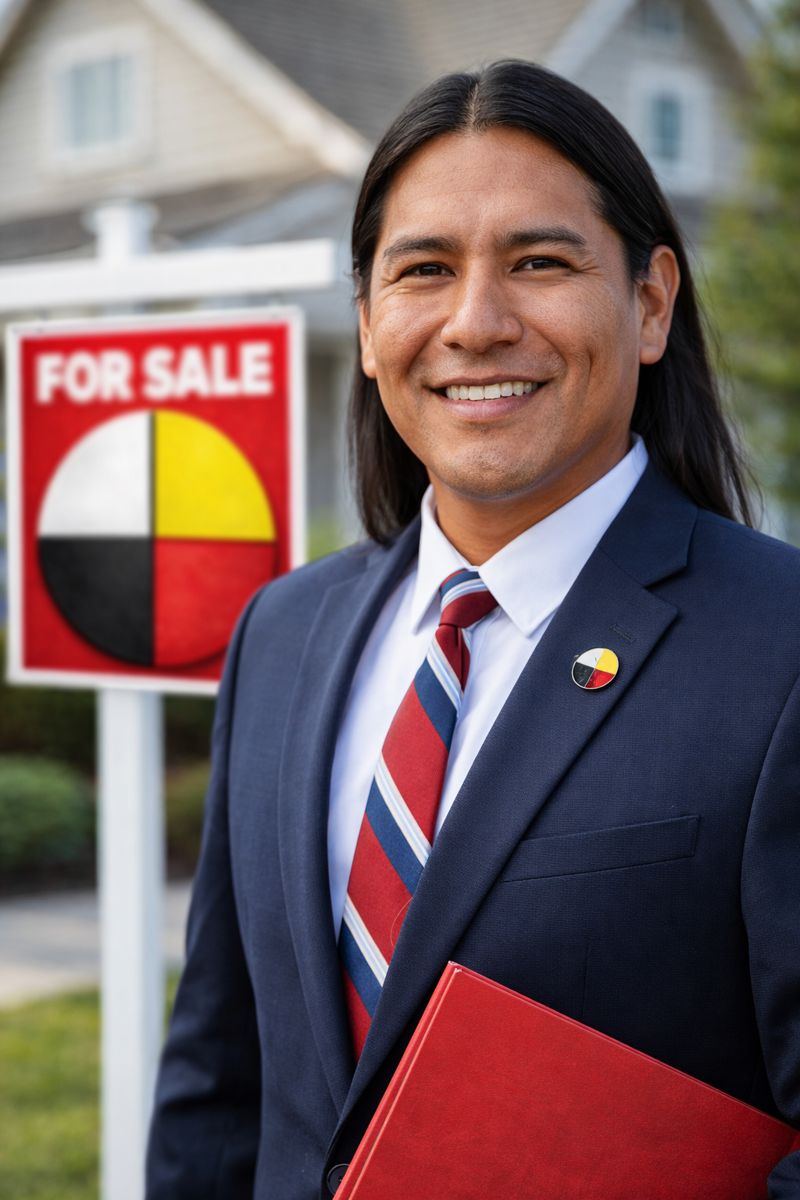
If you are Native and considering real estate
Here is the straight truth:
Real estate can be a viable, flexible, and high-earning profession. It can also be unforgiving, unstable, and poorly explained at the entry point. Both things are true.
If you choose this path, you deserve accurate information, competent peers, and a profession willing to examine why so few people who are Native that are already here.
And if you are not Native and you work in real estate, here is a challenge: learn where the gaps come from, stop pretending they are accidental, and take the profession seriously enough to improve it.
That is how real access starts—not with slogans, but with clarity.
Text CAREER to 612-286-0087 or email kenalgerrealestate@gmail.com for more information on how to get started on being a REALTOR®